Recently, I shared with a dear pal that more and more of my daydreaming time finds me wandering a mental path alongside a stream of predictable outcomes– that pervasive notion that the likelihood of knowable future events is directly tied to what we do, don’t do, think, believe, prepare, and avoid today. From psychology to health, finance to business, the idea that with enough knowledge and effort, we can foresee what’s coming next is almost a religious conviction. But for those of us caught somewhere between the promises of a better tomorrow and the oft’ crushing reality of today—particularly those of us rounding the corner towards the half-century mark with the memory of childhood in the 80’s still fighting it out in our collective abandonment and IDGAF-ery issues—the idea that everything can be neatly predicted feels, well, a little too tidy.
In psychology, cognitive-behavioral therapy promises that by tweaking the way we think, we can predictably shift our behavior and emotions. It’s a nice theory, especially when you’re stuck in a perpetual loop of self-doubt and existential dread. But when your brain’s been wired for decades to expect the worst, those predictable “good outcomes” feel more like a distant fantasy than a viable reality. Another night sitting in front of my laptop with the cracked screen instead of heading to the gym? Breakfast quesadillas washed down with SodaStream Starry flavor? Positive mental attitude about my neighbors tearing up the easement without bothering to let me know it was going down that way? Psychology is pushing it.
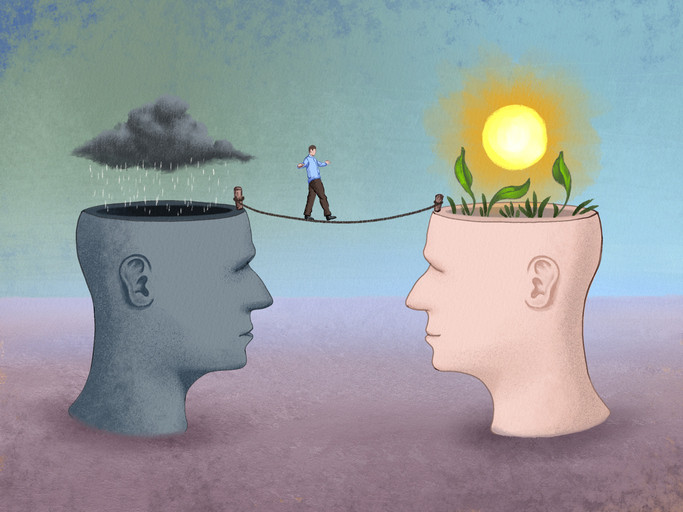
Health isn’t much different. With all the advancements in personalized medical care and novel therapies using genetics and AI, there’s this illusion that we can predict when disease will strike, or that a little exercise and kale can save us from ourselves. Sure, some people live forever in perfect health. But many of us have watched loved ones, with all the science in the world, succumb to the unpredictable, shaking our faith in a “manageable” future. Health outcomes feel less like guarantees and more like Russian roulette.
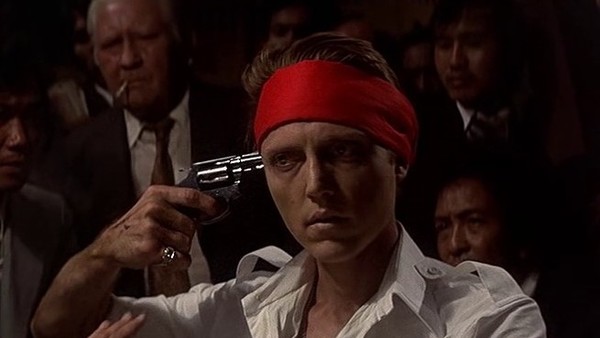
Finance? Fuck off already. We’re told that if we just follow the right investment strategy or learn the stock market’s intricacies, we can predict our financial futures. But the reality is far less forgiving. For many of us, financial stability was just one more lie we were sold, and the future is a terrifying unknown. Spectrum raised its prices for home internet and didn’t bother to tell you after you finally gave in to “paperless” (read: notice-less) billing. Diesel back up above $6 a gallon. BlackRock gonna lube your chute more than Diddy on that crypto investment you’ve made. Predictable outcomes only seem to work for those who already have money, not for the rest of us scraping by.
In business, success is portrayed as the result of calculated moves, KPIs, and risk management. If you make the right decisions, the outcome is supposed to be clear. But most of us know better. We’ve seen companies rise and fall on whims, market shifts, and forces beyond anyone’s control. The business world loves to sell certainty, but uncertainty is its true currency.
And let’s face it—when you’ve spent your life being told that you control your destiny (for the sake of keeping this at a readable length, let’s leave out the whole recovery from 12 years of Catholic school and the falsehoods, lies and empty promises of religion), the idea that the future is somehow predictable feels like an existential joke. Teaching children goal-setting? Planning for retirement? Building a brighter future, where every move has a known consequence? The only predictability in any of that steaming pile of genetically-reborn Triceratops shit is that it is, indeed, in the immortal words of Dr. Malcolm, “…one big pile of shit.”

For Generation X, we’ve lived through the broken promises of the future, the empty spaces left by the institutions that sold us predictability, and the relentless grind of trying to control what can’t be controlled. Predictable outcomes are a nice idea, but we know better. The truth is messier, more chaotic, and often far less forgiving. And maybe that’s where our resilience comes in. Maybe that’s where our latch-key upbringing, getting shit done without parents, heat ‘n’ serve meals at the dawning of the microwave era—not as neat solutions, but as a coping mechanism for the unpredictable, unmanageable chaos of it all–prepared us for this future.
So what is predictable? Other than Ben Franklin’s uplifting offer of “Death and taxes”?
I will predictably play Spotify music during my sunrise walk each day that reduces me to tears, remembering people and places that, in most cases, are long gone and not coming back. I will predictably force myself to hide rage and sadness and despair behind a visage of got-my-shit-togetherness, fulfillment, leadership, parenthood for the benefit of others. I will very predictably maintain select human connections with the idea of obtaining social, spiritual, personal outcomes that are ever more fleeting with time, if not altogether over the horizon on proverbial ships that have sailed.
And I will most predictably continue to do these and so many other things under the self-imposed authoritative illusion that I am in control of my own destiny… despite its inexorable and undeniable connection to the unknown destinies of every other sentient being on this little rock.

 El Gigante Picante del Monte