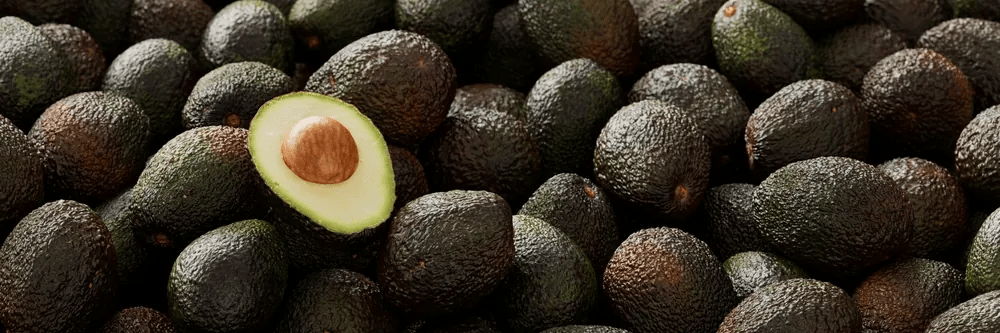
With the changing seasons, my local grocery store just switched back to locally-sourced avocados from the South American ones they put on the shelves when it’s winter here. While supply chains have improved dramatically during my lifetime, there is still a noticeable difference between the spring & summer avocados compared to the late-fall and winter ones that we suffer for a few months. Sure, I’ll buy them… I’ll eat them… I’ll feed them to my family… but there is no mistaking the relative freshness of something grown a hundred miles away vs. something grown in a different hemisphere.
Even then, as I was gently squeezing the bumpy greenish-black fruits piled high in the produce section between similarly stacked pyramids of tomatoes and limes, I got to thinking about the methodology the average avocado-buyer employs making a selection:
– How many do I need to buy?
– When will I plan to eat these… how ripe do they need to be now?
– What will I use these avocados for? Guacamole? Sliced on toast?
– Which ones are bigger, since they’re all “3 for $5” or whatever?
Still, there’s so much more to it than that: Is there a way to determine if the avocado has a proportionately larger or smaller seed inside, such that you would get more or less avocado-meat for your purchase? Or did you know that buying avocados with that little piece of stem still attached to the top–instead of a hole where the stem used to be–keeps the avocado fresher for longer? And that you should keep them out of the fridge? And that storing them near other fruit will ripen them faster? And, and…
And like most silly things I end up writing about or reflecting upon, I went down the avocado rabbit hole, as I walked around the store picking up the rest of my groceries.
The moment an avocado is disconnected from the tree, it begins to change, from a rock-hard inedible thing, into a mushy, rotten inedible thing. Along the way, there are several days when the avocado is soft enough to eat; it improves as it softens to a certain point, then starts to decompose past that point becoming less palatable. If you’re way off time-wise, it’s obvious; if you’re a little too early, you get that chewy, watery bite. If you’re a little too late, it’s that mushy, stringy, black-blotchy crap.
By logic, then, there exists an exact point in time when that avocado is absolutely, positively, perfectly ripe. Every fraction of time up to that point is improvement, and every moment after it is decline… but chances are, you’ve never hit perfection exactly. Heck, cutting it open and exposing it to oxygen probably changes the whole equation. Probability suggests you’ve never actually hit this temporal bullseye.
“Good enough,” “Close enough,” “Still awesome,” or “A little off, but still OK”… all things I’ve thought, maybe subconsciously, about avocados gone by. Occasionally, you get a “Oh, HECK YES”– creamy, smooth, uniformly green, earthy, slippery–and maybe you’re left to wonder if you just got lucky, or if you did something right…. the avocado by which to measure all others?
As a student of time and timing, it was just a passing thought while shopping. Heck, I think I only ate two of them anyway, as I waited too long to halve the third, and ended up throwing it in my compost pile in the corner of the yard.
But I suppose it leaves some of my larger ontological questions about timing unanswered; maybe none more important than the wonder if I’m improving towards a transcendent moment of fulfillment, or slowly but steadily moving farther from that point already passed.

 El Gigante Picante del Monte